Meta Description: DNF meaning in text explained simply. Learn what DNF means, its full form, chat examples, social media use, and the best ways to reply.
Have you ever received a message like “I DNF this book” or “DNF the race” and wondered what it means? You are not alone.
Slang and short forms can be confusing, especially when people use them on WhatsApp, Instagram, Snapchat, TikTok, or in online groups.
The DNF meaning in text is usually “Did Not Finish.” It means someone started something but did not complete it.
The term is common in sports, books, games, challenges, and casual online chats. It can also be used as a verb, such as “I DNF’d the movie,” meaning “I stopped watching the movie before it ended.”
Let’s look at the meaning, examples, tone, and common uses of DNF in simple words.
What Does “DNF” Mean in Text?
DNF usually means “Did Not Finish.”
In simple words, it means a person started something but stopped before completing it.
For example:
- “I DNF the book” = I did not finish the book.
- “She got a DNF” = She started the event but did not finish it.
- “I DNF’d the show” = I stopped watching the show before it ended.
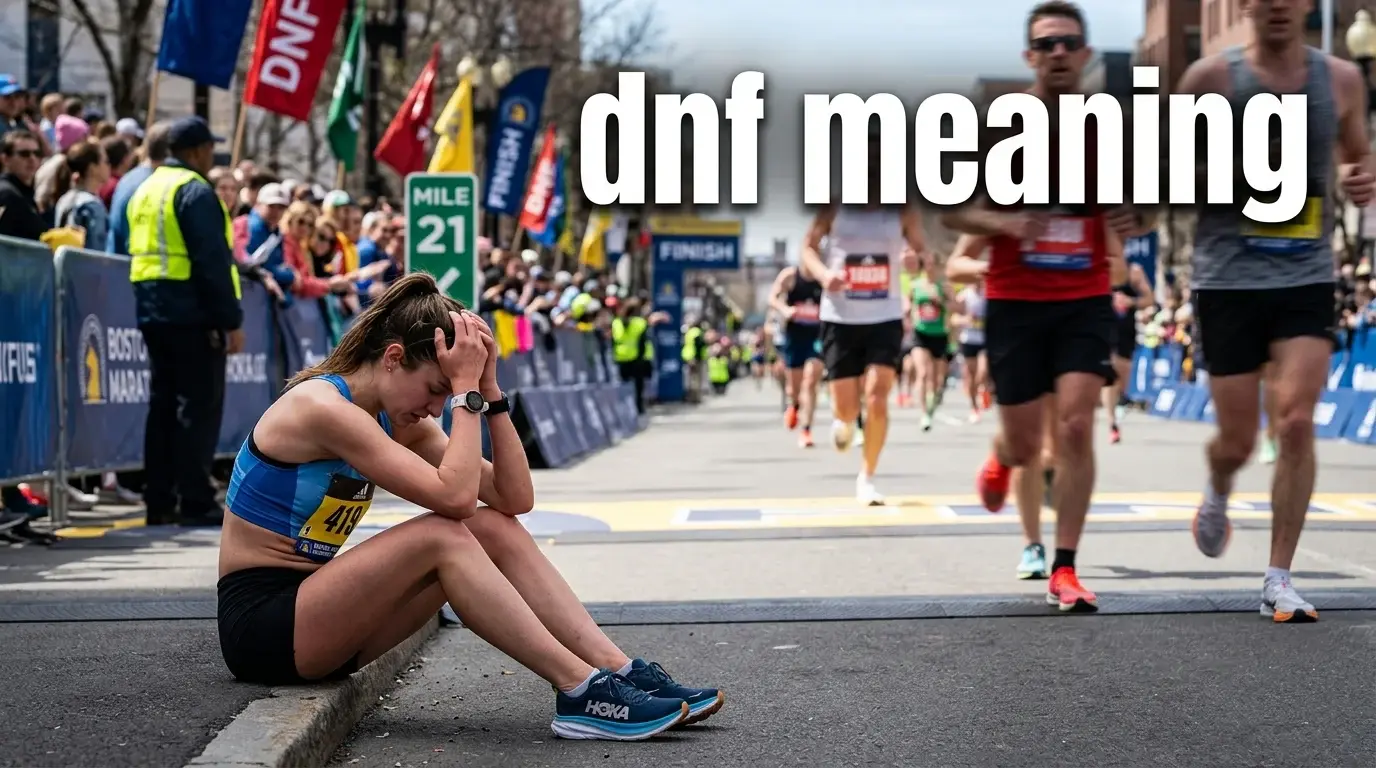
DNF first became common in sports and race results. It is used when a competitor starts a race but does not reach the finish. Today, people also use it casually for books, movies, games, tasks, and other activities.
Full Form of “DNF”
The main full form of DNF is:
DNF = Did Not Finish
This is the standard meaning in sports and many online conversations.
For example:
“He got a DNF in the race.”
This means:
“He started the race but did not finish it.”
There can be other meanings of DNF in different fields. For example, DNF can mean Disjunctive Normal Form in logic and computer science. In social media slang, some sources also list “Do Not Follow.” So, always check the context before deciding what DNF means.
How Is “DNF” Used in Chat?
People use DNF as a short way to say that they did not complete something.
Example 1: Talking About a Book
Friend: Did you finish that book?
You: No, I DNF’d it.
Here, DNF means the person started the book but stopped reading it.
Example 2: Talking About a Movie
Friend: Did you watch the whole movie?
You: Nope, DNF after 30 minutes. It was too boring.
Here, the person stopped watching before the movie ended.
Example 3: Talking About a Race
Friend: How was your race?
You: I got a DNF because my bike had a problem.
Here, DNF means the person started the race but could not finish it.
DNF is especially common in reading communities, sports discussions, gaming, and other online groups.
What Does “DNF” Mean From a Girl?
If a girl sends “DNF”, the meaning depends on what you were talking about.
If you were discussing a book, movie, game, race, or task, she probably means “Did Not Finish.”
For example:
You: Did you finish the series?
Her: DNF 😭
She probably means she started the series but stopped watching it.
The word itself is not normally romantic or flirty. The emotional tone comes from the conversation around it.
It can sound:
- Casual
- Funny
- Disappointed
- Neutral
- Slightly negative
For example:
“DNF this book 😂”
sounds casual and playful.
But:
“DNF. I couldn’t continue.”
sounds more serious.
What Does “DNF” Mean From a Boy?
The meaning is generally the same when a boy uses DNF.
If he says:
“DNF the game last night.”
he probably means:
“I did not finish the game last night.”
If he says:
“DNF this movie.”
he means that he stopped watching the movie.
So, DNF does not have a special meaning just because a boy uses it. The context matters more than the person’s gender.
Is “DNF” Rude or Polite?
DNF is usually casual, not rude.
It is simply a short form. It does not contain an insult or offensive word.
However, the way you use it can affect how it sounds.
For example:
“DNF this book. Too boring.”
is casual but can sound negative toward the book.
If someone worked hard on something and you simply reply:
“DNF.”
they may feel that your reply is too short or dismissive.
Use the full phrase when you want to sound clearer or more polite.
Instead of:
“DNF.”
you can say:
“I started it, but I couldn’t finish it.”
That sounds warmer and more complete.
When Should You Use “DNF”?
You can use DNF in casual conversations when the other person understands slang.
Good situations include:
- Talking about books
- Talking about movies
- Talking about TV shows
- Discussing video games
- Talking about races
- Discussing sports
- Talking about online challenges
- Chatting with close friends
- Talking in casual group chats
- Posting in reading communities
- Writing casual social media captions
- Discussing something you stopped doing
- Talking about a task you did not complete
For example:
“DNF’d this book at 40%.”
This is a common casual way to say you stopped reading the book before finishing it.
When Should You NOT Use “DNF”?
Avoid DNF when the situation is formal or when the other person may not know the abbreviation.
Do not use it in:
- Formal emails
- Job applications
- Business reports
- School assignments
- Official documents
- Professional meetings
- Formal customer messages
- Serious explanations
- Important announcements
- Conversations with people unfamiliar with internet slang
Instead, use “did not finish” or explain what happened.
For example, instead of:
“DNF the project.”
write:
“I was unable to finish the project.”
This is much clearer in a professional setting.
Best Replies to “DNF”
If someone sends you “DNF”, your reply should depend on the context.
Here are five simple replies:
- “Oh, why didn’t you finish it?”
- “Was it that boring?”
- “Same! I DNF’d it too 😂”
- “You should give it another try.”
- “What made you stop?”
If the person is talking about a race, you could say:
“Are you okay? What happened?”
If they are talking about a book, you could say:
“What made you DNF it?”
These replies keep the conversation natural.
“DNF” Meaning on WhatsApp
On WhatsApp, DNF usually means “Did Not Finish” when the conversation is about something that was started but not completed.
Example:
Friend: Did you finish the assignment?
You: DNF 😭
The meaning is:
“I did not finish the assignment.”
WhatsApp does not give DNF a special meaning. The meaning comes from the context of the conversation.
“DNF” Meaning on Instagram
On Instagram, DNF can also mean “Did Not Finish.”
It may appear in:
- Comments
- Direct messages
- Captions
- Story replies
- Book posts
- Sports discussions
For example:
“DNF this one at 50%.”
A reader may be saying that they stopped reading a book halfway through.
Book and reading communities often use DNF as a short label for a book they did not finish.
“DNF” Meaning on Snapchat
On Snapchat, DNF can mean “Did Not Finish” when the context is about a task, movie, game, book, or activity.
For example:
Friend: Did you watch the whole movie?
You: DNF 😂
This means:
“No, I did not finish it.”
The meaning usually stays the same across messaging apps when the context is about completing something.
Does DNF Have Different Meanings?
Yes. DNF can have different meanings in different contexts.
The most common meaning discussed here is Did Not Finish.
Other meanings can include:
- Did Not Finish — used in sports, reading, games, and casual chat.
- Do Not Follow — sometimes used in social media slang.
- Disjunctive Normal Form — a technical term in logic and computer science.
- Did Not Find — used in some specific contexts, such as geocaching.
So, do not assume that every DNF means the same thing. Look at the words around it.
Similar Slang Words Like “DNF”
Here are five related abbreviations and terms:
1. DNS
DNS usually means Did Not Start. It is used when someone was expected to compete but did not start the event.
2. DNQ
DNQ can mean Did Not Qualify. It is often used in sports when someone does not qualify for the next stage.
3. TBR
TBR means To Be Read. Book lovers use it for books they plan to read.
4. WIP
WIP means Work In Progress. It describes something that is still being worked on.
5. TBD
TBD means To Be Determined. It is used when something has not been decided yet.
These terms can appear in online chats, social media, gaming, sports, and reading communities.
DNF in Sports
DNF is strongly connected to sports.
In a race, a competitor can receive a DNF when they start but do not complete the event. This can happen for many reasons, including injury, mechanical problems, weather, or other issues.
For example:
“The driver had a DNF after the car developed a problem.”
This does not tell us exactly why the person stopped unless the context gives the reason.
A DNF is mainly a status in the results. It means the competitor did not finish the event.
DNF in Books and Reading
Book readers also use DNF in a very common way.
If someone starts a book but stops reading before the final page, they may say:
“I DNF’d the book.”
They may also say:
“This book is on my DNF list.”
This does not always mean the book is bad. A reader may stop because:
- The story is too slow.
- The writing is not enjoyable.
- The characters are not interesting.
- They are not in the mood for the genre.
- They have too many other books to read.
- The book is not what they expected.
The reading use of DNF is now common in online book communities.
DNF in Gaming
Gamers may also use DNF when they do not complete a game, race, challenge, or mission.
For example:
“I DNF’d the challenge.”
This means:
“I started the challenge but did not finish it.”
The exact meaning depends on the game and conversation.
Is DNF a Negative Word?
Not always.
DNF only tells you that something was not completed. It does not automatically explain why.
For example:
“I DNF’d the marathon because I was injured.”
This does not mean the person was lazy.
Likewise:
“I DNF’d the book because it wasn’t for me.”
This simply tells you that the reader stopped reading.
So, DNF is better understood as a status or description, not automatically as an insult or judgment.
Is DNF Common in Daily Chat?
DNF is fairly common in certain online communities, especially when people talk about sports, books, games, or unfinished activities.
However, not everyone will know the abbreviation.
If you are unsure whether the other person understands it, write the full phrase instead.
For example:
“I did not finish the book.”
is clearer than:
“DNF the book.”
This is especially useful when talking to older people or people who do not often use internet slang.
FAQs
Is DNF positive or negative?
DNF is mostly neutral. It means something was not finished. The reason can be positive, negative, or simply practical.
What does DNF stand for?
DNF usually stands for Did Not Finish. It is widely used in sports and casual online conversations.
Is DNF safe to use with elders?
It is better to use the full phrase with elders unless you know they understand internet slang.
Is DNF common in daily chat?
It is common in certain online communities, especially sports, gaming, and book discussions. It may not be understood by everyone.
Does DNF mean failure?
No. DNF simply means something was not finished. It does not explain why the person stopped.
What does “I DNF’d it” mean?
It means “I started it but did not finish it.” This phrase is often used for books, movies, games, and other activities.
Conclusion
The DNF meaning in text is usually “Did Not Finish.” It means someone started something but did not complete it.
You may see DNF in chats about books, movies, games, races, sports, challenges, and other activities. It is casual and usually not rude.
For example, “I DNF’d the book” means “I started the book but did not finish it.”
Now you can understand DNF when you see it on WhatsApp, Instagram, Snapchat, or other online platforms. Just remember that slang can have different meanings, so always check the context before replying.
If you enjoy learning internet slang, exploring related abbreviations can also help you understand online conversations more easily.
Read More: DLC Meaning in Text, Chat, and Social Media